Archive Search Page
Heyday of the many pictures at Pavilion
8 July 1986
Holmes Street
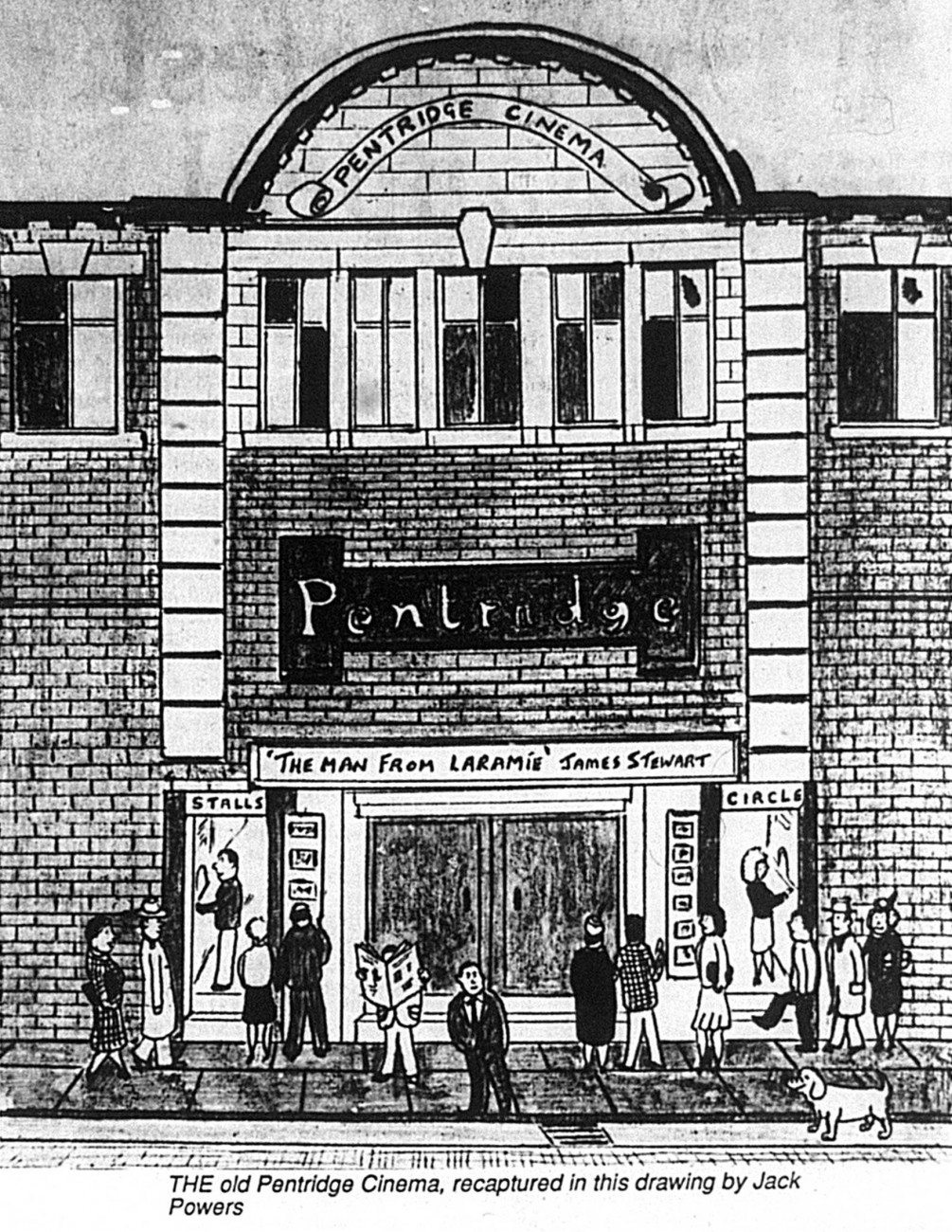
When the fair at Fullege moves into full swing this week it will be a far different set up to the days recalled here by Burnley cinema buff Jack Powers. For many of the personalities of the early 1900s were pioneers of the country's cinema industry… now virtually a memory in towns such as Burnley. Jack of Stoney Street recalls how at the turn of the century the likes of Pat Collins, Studt, Seager and Scott, President Kemp and Captain Payne toured the fairgrounds with the bioscope shows.
Capt. Payne came to Burnley in 1906 and many of his contemporaries who carted their equipment from fair to fair opened picture halls and settled down in one particular area converting chapels, shops and temperance halls.
Early bioscopy shows were held at the old Empire, Saint James Street as early as 1896 and film shows were held at the old gaiety theatre on the cattle market (side of the police station) until it was condemned and closed in 1916.
At Nelson, Herbert Hartley who had started as a youth in the cinema business in 1906 later ran a small circuit of cinemas including the Grand, Queens and Alhambra in Nelson, the Grand in Burnley at the Olympia and Hippodrome in Todmorden.
The bioscopy shows had been noted for their elaboratively-carved and gilded fronts when on the fairgrounds. Initially the booths were usually lined with blue and gold drapes to add to the cosiness. What had been the Palace Skating Rink on Church Street became the Pavilion or penny pictures. Admission was one penny to watch the film on the back of the screen and two pence on the right side. By 1910 the New Temperance Hall on Parker Lane, the Pentridge, the Coliseum and Ruskin Hall on Trafalgar Street (later the Alhambra) had been opened.
Eventually the Empire and the Palace changed over to pictures and in 1929 Burnley cinemagoers thrilled to the magic of Al Jolson in Burnley's first talking picture, "The Singing Fool". In the years thereafter we thrilled to the antics of the Keystone Cops, Charlie Chaplin, The Three Stooges, Abbott and Costello and Laurel and Hardy. Then there were the gangster films starring Edward G Robinson, George Raft and Jimmy Cagney. The westerns with Tom Mix, Buck Jones, Ken Maynard and later Jimmy Stewart, John Wayne and Audie Murphy. Burnley children were taken to see the magic of Walt Disney in the all-time classics such as Pinocchio, Bambi, Lady and the Tramp, and Snow White.
Queues formed outside of the palace for the new 3D specs to see "house of wax" and when the bond films arrived at the Odeon, the queue stretched down Goldsmith Lane into Church Street. In January 1960 the Roxy Cinema burned down and in June 1961 the demolition men pulled down the Savoy cinema which had closed in 1956 after first opening in 1922.
With the success of television the cinema in Burnley, like the rest of the country, went into decline, some trying girly reviews and bingo. The big American musicals such as "an American in Paris" "Carmen Jones"" singing in the rain" "Oklahoma" "South Pacific" all provided Burnley cinema goers with big-screen entertainment.
Remember when a youngster could ask to be taken in without being taken off?.
Remember Saturday morning at the Odeon club where we all sang the motto "as members of the audience club we all intend to be good citizens when we grow up, the champions of the free" and in the afternoons, the Pentridge gave us Hopalong Cassidy, Flash Gordon and Batman