End of the Brunton Story, And of an Era (5 of 8)
2 Feb 1968
Trafalgar Redevelopment, Burnley
Media Ref: BE68ng39423_d
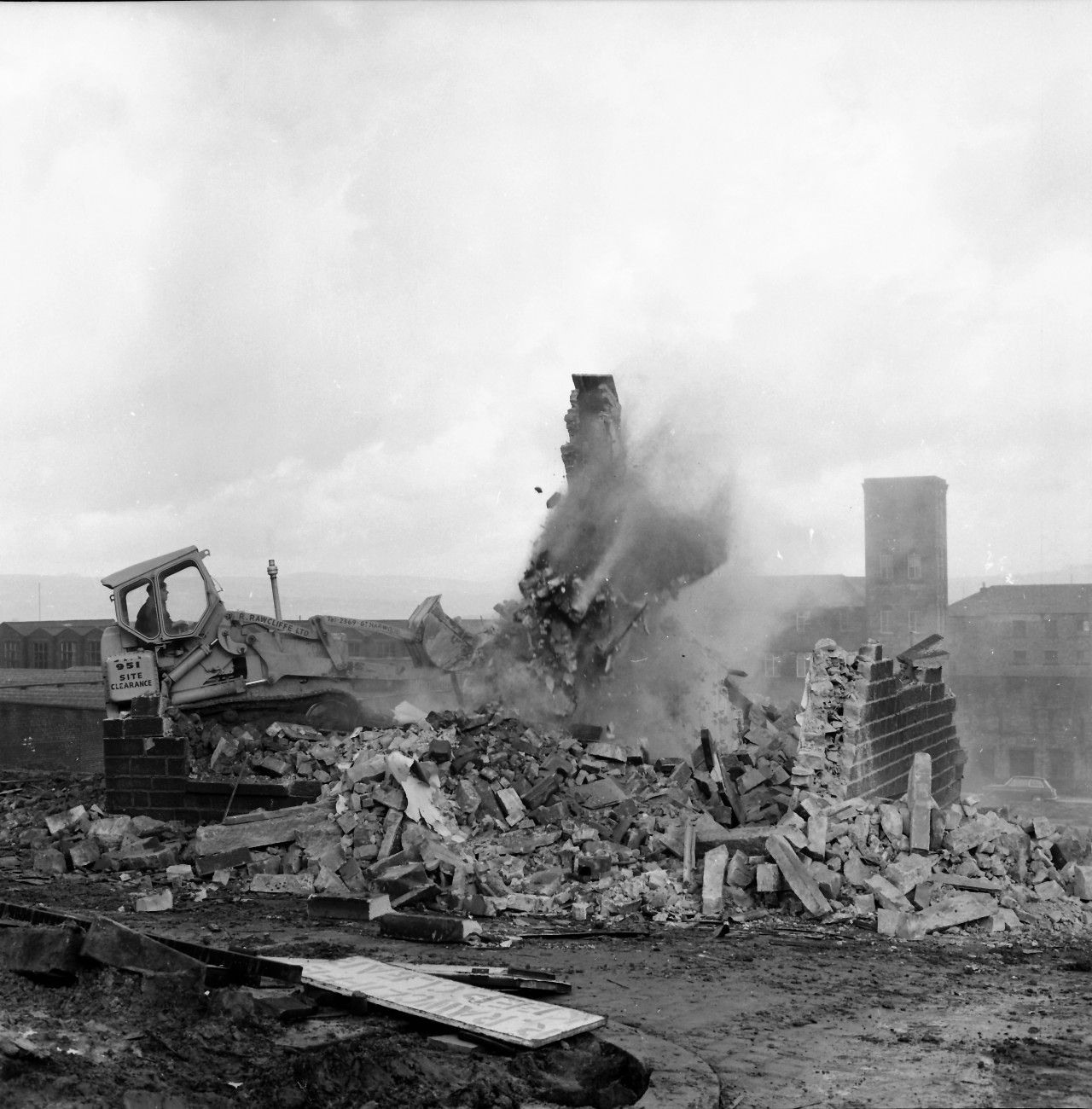


In 10 minutes’ work on Friday morning, demolition men knocked, or rather brushed away easily and almost contemptuously, two houses standing in Moss Street, the last buildings on the Trafalgar redevelopment site. The ease with which modern machinery can flick away someone’s home was an anti-climax after all that has gone before- the proud building of such a large part of industrial Burnley, the sweeping changes envisaged in the wholesale clearance of the site and its rebuilding with the arguments still going on about those plans. Finally came the pathetic story of the Brunton family who stayed at their little house in Moss Street while around them the streets grew empty as other inhabitants left and their one home remained as the demolition men chewed away terrace after terrace in the area. William and Florrie Brunton objected that £88 was insufficient compensation, and they took the case to public enquiry and had MP, Mr Dan Jones, involved as they fought for a better home than the one offered to replace No 1 Moss Street. For months they lived in a ghost town, but now they are re-settled and their departure was the signal for the last push from the bulldozer.Now that the last row has been flattened, the area seems much smaller than when it was packed with mid Victorian terraces. Enough of the stone is lying around broken, or with its layers of soot scraped off, to see the original honey-gold or soft grey of the Rossendale stone just as it was when hauled to the site by teams of draught horses.
The rows of terraces were intentionally built around the numerous mills in the area and so it was that the hopes, fears and disappointments of a small town were concentrated in this area. The cobbled streets are still outlined and beside them stood houses, some of them with brightly coloured doors where houseproud women whitened their doorsteps and sprinkled the pavements with washing flakes on rainy days. In others, slatterns let their lace curtains hang unchanged year after year. Long gone is the clatter of clogs going to work before light and, in winter, coming home after dark. The more gentile tread of high black boots stepping gaily off to a wedding or a christening party, or heavily and sadly, to a deathbed.
A hundred yards away, work has started on phase one of the redevelopment, using methods that the old builders, and their grandfathers grandfathers, would have recognised. Navvies, joiners, plumbers, bricklayers and plasterers were working in their age-old ways. But to demolish something a hundred years ago would have been a more difficult job than today. A steam engine would have had to be manoeuvred to site and then would have been too immobile to be of much use. A hundred horses would have been difficult to coordinate if they could have been assembled anyway. Knocking down a building would have been done slowly, almost stone by stone. In ten minutes, a bulldozer knocked down the last house in Moss Street on Friday, an example of twentieth century specialist demolition.