A Happy Blend Of The Old And New
19 Jan 1971
Earnshaw Bros. and Booth Limited, Central Mill, Albert Street, Burnley
Media Ref: BE71ng46805


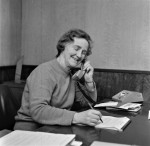

Mr. Charlie Schofield, on the right in this picture, started work at the firm in 1932 when he left school and is a fully trained french polisher. He now supervises the finishing processes. In seven years in the Forces Charlie served with the 8th Army "Desert Rats" and now learns Esperanto, a language designed to help "Nation speak peace unto nation."
From the first of an Express weekly industrial feature "We Can Make It" by Allan Halstead. The series outlines each firm's history and development and tells the story of ordinary people. It was linked with a competition "Unsung Hero '71" with a prize of a holiday in Ireland with a companion. To find all this series of articles search the website using the words - unsung hero.
To be invited into the extensive Burnley factory of Earnshaw Brothers and Booth Limited at Central Mill Albert Street is to discover a community which has managed to blend many of the virtues of an old-style family business with the go-ahead streamlined techniques of the 20th Century. Here too, work and play have gone hand in hand, with management and employees finding their mark in such diverse spheres as the cricket field and the world of art. A company joke is that when people start work they are asked what they can do on the cricket field. In one team picture were four men well known in both spheres - George Earnshaw, Harry Langton, Johnny Town and Wilfrid Booth.
Now spread over 130,000 sq. ft, the firm started in 1917 in a small converted house in Swainbank Street, where John Charles Earnshaw was joined by his brother Maxwell, Wilfrid Booth and finally by J. W. Shackleton. There were moves to Waterloo Mill, Pentridge Mill and finally Central Mill. The products have changed too - from slay making (part of a loom on which a shuttle runs), to wooden mantle-pieces and bedsteads during the 1920's textile depression, leading to a wider range of bedroom and dining room furniture. During the war large sections of Hotspur and Horse gliders were fabricated for the airborne troops; and hundreds of thousands of intricate model aircraft were turned out for use in aircraft recognition training. During peacetime utility furniture was produced
The management is still in family hands with George and Cyril Earnshaw and Harold Sharrocks and Bernard Booth. Wood comes into the factory in lorry loads of tons a time and goes out mainly in the shape of "Nu-Lyne" furniture with the emphasis on kitchen units.